Comparing liposuction (or liposculpture) and abdominoplasty: indications, techniques and appropriate choices
The following article is based on a review of scientific publications from PubMed, focusing on the comparison between liposuction (or liposculpture) and abdominoplasty. It explores the goals of each procedure, the anatomical factors influencing the choice, patient classifications, the technical steps of abdominoplasty, risks and outcomes, and patient satisfaction. The data comes from prospective and retrospective studies to ensure an evidence-based approach.
Introduction and goals of the procedures
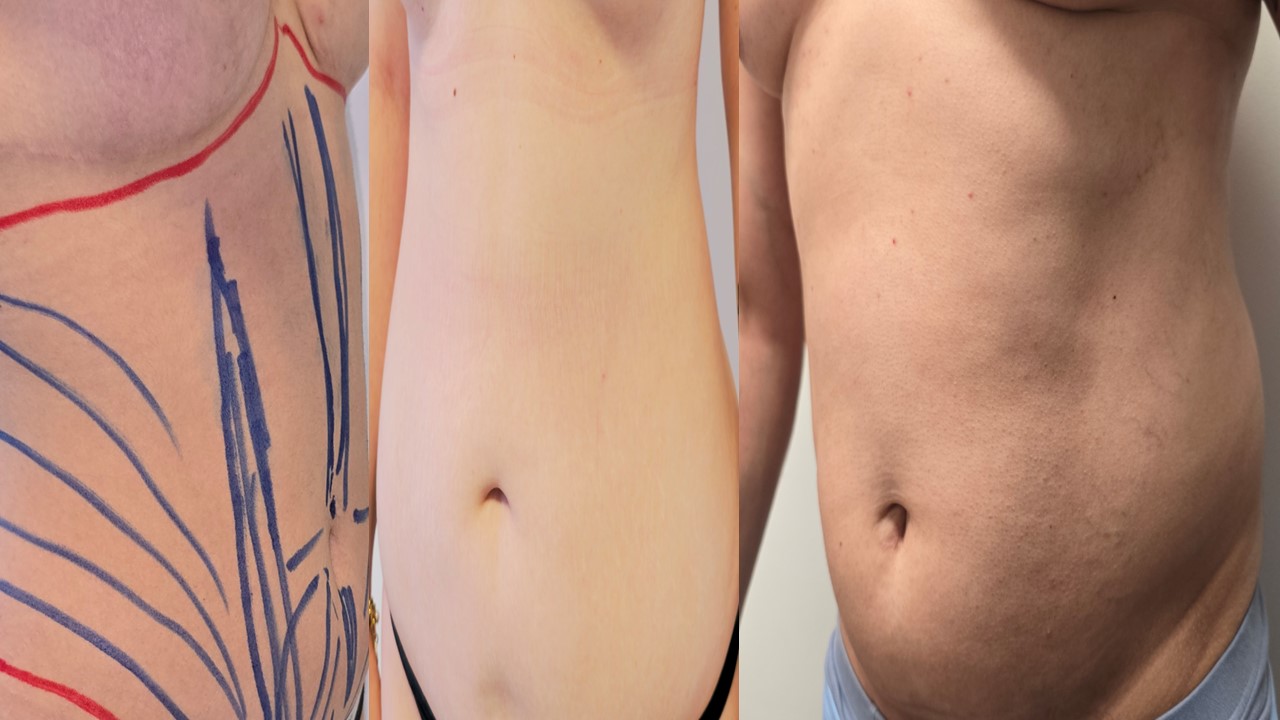
Liposuction primarily aims to remove localised fat deposits to improve body contour, without addressing loose skin or weakened muscles. It is ideal for reshaping areas such as the abdomen when the skin is elastic and able to retract naturally after fat extraction. Abdominoplasty (or tummy tuck), on the other hand, is a more comprehensive procedure that removes excess skin, tightens the abdominal muscles (such as the rectus abdominis) and may include adjacent liposuction to optimise results. It is indicated for deeper anatomical corrections, such as after pregnancy or massive weight loss, where liposuction alone would not restore a harmonious contour.
Anatomical factors and choosing between the procedures
For a patient seeking to improve the abdominal contour, the assessment must consider skin elasticity, excess fat and muscle laxity. If the skin is firm and elastic, with isolated excess fat and no muscle separation (diastasis recti), liposuction alone is often sufficient, as it reduces volume with natural skin retraction, leading to satisfactory results without a major incision. Conversely, if the skin is lax, with significant excess or muscle laxity, abdominoplasty becomes preferable in order to excise the surplus skin and repair the muscles, avoiding a "saggy" post-operative appearance. Studies show that liposuction alone results in an average weight reduction of 1 kg for the lower abdomen, while combined with abdominoplasty it can reach 2 kg, with a more marked improvement in contour.
Patient classification and clinical indications
Patients can be classified according to their soft tissues:
Technical steps of abdominoplasty
Abdominoplasty follows precise steps to maximise safety and aesthetics:
Risks, complications and evidence-based risk reduction
Abdominoplasty, alone or combined, delivers higher satisfaction (88-95% of patients) despite a longer and more uncomfortable recovery, because it addresses structural problems that liposuction cannot correct, leading to lasting improvements in contour and quality of life. Risks include seromas (fluid pockets), skin necrosis (4%) and thrombotic complications (venous thrombosis and pulmonary embolism, VTE, 0.5-1%). Liposuction alone has lower overall complication rates (2-4% of the complication rate of abdominoplasty). To minimise these risks, techniques such as conservative plication, limited undermining, anticoagulant prophylaxis and progressive drainage are used. Meta-analyses show that lipoabdominoplasty does not increase risks compared with abdominoplasty alone, and may even reduce them in expert hands.
Patient satisfaction and outcomes
Prospective studies indicate overall satisfaction of 88.8% for both procedures, but abdominoplasty combined with liposuction often reaches 95%. Patients report an "excellent appearance" in 60% of cases after abdominoplasty, versus a faster and less painful recovery with liposuction alone. Adding liposuction improves aesthetic outcomes without increasing risks, particularly in post-weight-loss patients.
At Brussels Surgical Center, we often advise combining the two techniques when abdominoplasty is indicated and fat is present mainly in the upper abdomen (just below the chest) and/or the flanks.
Conclusion
In summary, liposuction is sufficient for isolated excess fat with good skin elasticity, typically in younger patients without major weight fluctuations and without a history of pregnancy. Abdominoplasty is indicated for more complex corrections involving the skin and muscles. Prospective studies highlight the importance of a personalised assessment to optimise outcomes. Combining the two techniques often offers the best results in terms of satisfaction and safety.
Reference page: the full liposuction procedure page.
A specific question?